 As already discussed [in Part 2]on July 26th, the Convention broke into Committee of Detail [selected July 24th] until August 6th. The Committee consisted of five members Oliver Ellsworth (Connecticut) Nathaniel Gorham (Massachusetts) Edmund Randolph (Virginia) John Rutledge (South Carolina) James Wilson (Pennsylvania). The purpose of this committee was to make a draft constitution for the Convention as agreed to through this point of debating. Max Farrands records on the Convention contain James Wilson’s [Pennsylvania] notes from the committee, the only records of the committee that may in fact be available from the committee. James Madison’s Notes [Virginia] do not contain the committee with July 26th-Aug 6th having no entries, similarly Rufus King [Massachusetts] from July 15-Aug 7th. James McHenry [Maryland] did not return to the Convention until Aug 6th, after departing for personnel reason in Jun. Robert Yates [New York] last entry in from July 5th, before departing the convention, William Pierce [Georgia] does not address the Committee, nor does William Patterson [New York], or Alexander Hamilton [New york], though several do mention the committee did take place during this time, these are among the most common records of the convention itself.
An Originalist point of view on Constitution Interpretation, and what influenced the Founding Fathers. Formerly www.discoveringthefoundingprinciples.com
Saturday, October 23, 2010
General Welfare (Part 3) Debates in Convention, Committee of Detail
As already discussed [in Part 2]on July 26th, the Convention broke into Committee of Detail [selected July 24th] until August 6th. The Committee consisted of five members Oliver Ellsworth (Connecticut) Nathaniel Gorham (Massachusetts) Edmund Randolph (Virginia) John Rutledge (South Carolina) James Wilson (Pennsylvania). The purpose of this committee was to make a draft constitution for the Convention as agreed to through this point of debating. Max Farrands records on the Convention contain James Wilson’s [Pennsylvania] notes from the committee, the only records of the committee that may in fact be available from the committee. James Madison’s Notes [Virginia] do not contain the committee with July 26th-Aug 6th having no entries, similarly Rufus King [Massachusetts] from July 15-Aug 7th. James McHenry [Maryland] did not return to the Convention until Aug 6th, after departing for personnel reason in Jun. Robert Yates [New York] last entry in from July 5th, before departing the convention, William Pierce [Georgia] does not address the Committee, nor does William Patterson [New York], or Alexander Hamilton [New york], though several do mention the committee did take place during this time, these are among the most common records of the convention itself.

Wednesday, October 20, 2010
Political Venom strikes again
Christie O'Donnell of DE is currently being lighted up by media for asking "Where in the Constitution does it say separation of Church and State". The true fact is, it does not. The common reference of this term is associated with the First Amendment:
"Congress shall make no law respecting an establishment of religion, or prohibiting the free exercise thereof; or abridging the freedom of speech, or of the press; or the right of the people peaceably to assemble, and to petition the Government for a redress of grievances."
But however the term does not reside in it. It actually has its genesis from Thomas Jefferson in 1802 in a letter to the Danbury Baptist in Danbury CT.
But that point aside, one is being lambasted by media for stating a fact, IT IS IN FACT NOT IN THE CONSTITUTION, rather than it is not in agreement with their perception of meaning. Instead of stating it to be a "true" statement and take issue with her interpretation and contending it implies a "separation" though does not state it, a factual statement has been twisted into being presented as false due to a political disagreement.
This is Political Venom. We can disagree, we can agree to disagree, but we can not change the facts, and the attempt has been made here to do just that, change a factual statement from one, and present it to be false.
Monday, October 18, 2010
General Welfare (Part 2) Debates in Convention, the First Drafts.
 How did “General Welfare” end up in the Constitution? As noted in Part 1, the term was used in the Articles of Confederation, and a similar term was used in the Constitutions of several states. But how did it end up in the Constitution, and what was it thought of during the debates of Ratification, and not only the term general welfare, but the clause as a whole? What is perhaps the most striking aspect of general welfare during the Constitution Convention of 1787, is how little it was actually discussed, this is even more amplified considering the considerable debate among many of the other enumerated powers found in Article I Section 8.
The term General Welfare came up very early in the Convention, the first day after the rules of the Convention had been agreed upon, we see its first use. On May 29, 1787 Edmund Randolph, he Governor of Virginia rose and presented a proposed outline to a new Constitution, known commonly today as the Virginia Plan. In the very first resolution, Randolph he state the purpose of his proposal.
- 1. Resolved that the Articles of Confederation ought to be so corrected & enlarged as to accomplish the objects proposed by their institution; namely, "common defence, security of liberty and general welfare” 1
 In the Virginia plan, this use of General Welfare is in direct reference to its use in the Articles of Confederation, which [as described in Part 1] was a term to describe the general purpose of the Articles, and carried no direct power to the Congress Assembled. Randolph in his first resolution also uses it for this purpose, to describe the general intention or purpose of the Virginia plan, as it relates to the general purpose of the Articles of Confederation, to correct and amend the articles to secure the common defense, security of liberty and general welfare, not as a resolution of power.
On May 30th, the Convention broke to committee to consider Randolph’s resolutions, with his first resolution postponed indefinitely, in order to consider the following.
- That a union of the states merely federal will not accomplish the objects proposed by the Articles of Confederation—namely, common defence, security of liberty, and general welfare. 1
This resolution was in addition to two others agreed to regarding the general concepts of forbidding the States from making treaties, and making a government consisting of three branches, Legislature, Executive, and Judiciary. The use of the term here has no differing meaning than what Randolph had proposed the prior day in the Virginia Plan.
June 13th is the next time we encounter either general welfare itself, a draft of what would be the final version of Article I Section 8 Clause 1 or comparable scope of power, on a report from committee concerning a the basic structure of a new government [prelude to the New Jersey Plan].
- 6. Resolved, That the national legislature ought to be empowered to enjoy the legislative rights vested in Congress by the Confederation; and moreover, to legislate in all cases to which the separate states are incompetent, or in which the harmony of the United States may be interrupted by the exercise of individual legislation; to negative all laws passed by the several states contravening, in the opinion of the national legislature, the Articles of Union or any treaties subsisting under the authority of the Union. 1
On June 15th the new Jersey Plan was submitted by William Patterson [New Jersey], with the 3rd Resolution addressing the ability to tax, in proportion to the population of all free persons, and indentured servants [excluding Indians not taxed]. But no mention of the purpose of the power to tax is described as we would come to see it in the Constitution.
The debates of the New Jersey plan carry into June 16th, when James Wilson [Pennsylvania] brought up 13 points in regards to the New Jersey Plan. His 6th point was:
- 6. The national legislature is to make laws in all cases to which the separate states are incompetent, &c.; in place of this, Congress are to have additional power in a few cases only. 1
James Wilson later on, while discussing the necessity to divide the Legislature into two house, made the following point in regards to Congress in a single Legislature:
- If the Legislative Authority be not restrained there can be neither liberty nor stability. 1
 Even though James Wilson [who did sign the Constitution] was discussing the need of having two house in the Legislature vice one as proposed in the New Jersey Plan, the sentiment carries is what is significant, is the desire for restraint on the Legislature, this was essential to ensure Liberty and to maintain a stable political system.
Though this resolution does directly reflect either general welfare or its clause, it does go toward showing the desire of the convention to base the power structure off of the Articles of Confederation, and expand them as needed.
It was not until July 17th that General Welfare was again discussed [in the records of the notes whom attended and the Federal Journal].
- Mr. [Roger] SHERMAN observed, that it would be difficult to draw the line between the powers of the general legislature and those to be left with the states; that he did not like the definition contained in the resolution; and proposed, in its place, to the words “individual legislation,” inclusive, to insert “to make laws binding on the people of the United States in all cases which may concern the common interests of the Union; but not to interfere with the government of the individual states in any matters of internal police which respect the government of such states only, and wherein the general welfare of the United States is not concerned.” 1
Roger Sherman [Connecticut] was discussing the following clause from the day before.
- “And moreover to legislate in all cases to which the separate states are incompetent, or in which the harmony of the United States may be interrupted by the exercise of individual legislation,” 1
 At this point in the Convention the Delegates were debating the division of power from the National [Federal] and State Governments. Fresh on the minds of all was the inability of a state to quell a rebellion [Shay’s rebellion] in addition to the inability of the Congress Assembled to stop it because it lacked the power, in addition to numerous other short comings associated with the Articles of Confederation. This clause immediately drew the ire of several Delegates including Pierce Butler [South Carolina] and Nathaniel Gorham [Massachusetts]. They both contended on an explanation of particularly “incompetent”, and, “The vagueness of the terms rendered it impossible for any precise judgment to be formed”. John Rutledge [South Carolina] was also opposed, and moved for it be struck, with the votes being even, this motion failed.
Back to Roger Sherman’s motion, after being opposed by Gouverneur Morris [Pennsylvania] that some items the States did need policing, such as paper money, Roger Sherman defended the proposal by.
- “in explanation of his idea, read an enumeration of powers, including the power of levying taxes on trade, but not the power of direct taxation.”. [italics noted in Madison’s Notes on the convention] 1
In the end Roger Sherman’s proposal failed by a substantial 8-2 vote. But what is to note here is, nowhere in the discussion was General Welfare moved to be a power of General Power, but was rather simply used as a passive term of description of the purpose of his proposal. The debate centered around how to effectively divide National from State powers, and the overall premise was the National government could not interfere with the actions of a State, unless it was against the interest of the “general welfare”, of the United states as a whole. as he later explained was limited to the enumerated powers and levying of taxes on trade. In the whole context, the idea was not to enable the National government to do things it felt were in the National welfare, but to prevent only those that were actions by states that were against the whole National welfare. As it was implied in this instance, it was not making reference to it is a general enabling power to a governing body.
The fact that the “incompetent’ drew a significant amount of attention from several delegates due to its potential of allowing the government to expand its powers to those it was not intended, while the term “general welfare” was drew no objections at all, goes to only supports the previous notion, that this term is used as a general meaning phrase to describe purpose and not a power enabling general clause. The whole debate around this single use is substantial in that it also was in reference of taxing power, the power that would eventual be described in the very same clause general welfare ended up in.
On July 26th resolutions were agreed to on the basic structure of the new Constitution, included in these is Resolution 6:
- 6. Resolved, That the national legislature ought to possess the legislative rights vested in Congress by the Confederation; and, moreover, to legislate in all cases for the general interests of the Union, and also in those to which the states are separately incompetent, or in which the harmony of the United States may be interrupted by the exercise of individual legislation.
 After the whole proposal of 23 resolutions were submitted, they were referred to committee along with Charles Pinckney’s [South Carolina] Constitution proposal from May 29th, and William Patterson’s New Jersey plan from June 15th. As already mentioned William Patterson’s New Jersey plan did not contain a general welfare or power clause, though did contain the contended “incompetence'” portion, that is still reflected in the 6th resolution on July 26th. Charles Pinckney’s draft Constitution from May 29th, also did not contain a general welfare or power clause, but did contain the context of the rest of what is Article I Section Clause 1, in Article VI of his proposal.
- Art VI – The Legislature of the United states shall have the power to lay and collect taxes, imposts, and excises. 2
Through July 26th, General Welfare or any form of it, has been used very sparingly and sporadically, and thus far used mainly in reference to the use of it in the Articles of Confederation. But debates have already taken place about other aspects of Congressional power and is it being restrained enough, but not one of these was on the term general welfare. Up to this point in the Convention it does not seem to appear that general welfare is anything more than the term that was used in the Articles of Confederation which carried no weight of power at all as discussed in part 1, because why would they debate ‘incompetence’ as being too much power to Congress and draw the ire of at least half the delegates based on the split vote for its removal, but not even mention once an opposition “general welfare” also as being a power that may give Congress too much power?
Part 1 : Part 2 : Part 3: Part 4 : Part 5 : Part 6 : Part 7
1 James Madison Notes on the Convention of 17872 Charles Pinckney Draft Constitution, presented on May 29th 1787. No record from the Convention of 1787 itself outlines Pinckney’s proposed Constitution, though Journals do reflect the fact he submitted one for consideration. The Draft used as his proposal was submitted by Pinckney himself in 1818 years after the Convention, when an attempt was being made to collect and preserve all information from the Convention itself by future President John Quincy Adams. The fact that limited records from the Convention details his proposals does call into question the accuracy of the Draft he submitted as to being the one actually proposed on May 29, 1787, though notes from James Wilson discovered in the early 1900’s tend to show much a what he submitted to be accurate.
General Welfare (Part 2) Debates in Convention, the First Drafts.
How did “General Welfare” end up in the Constitution? As noted in Part 1, the term was used in the Articles of Confederation, and a similar term was used in the Constitutions of several states. But how did it end up in the Constitution, and what was it thought of during the debates of Ratification, and not only the term general welfare, but the clause as a whole? What is perhaps the most striking aspect of general welfare during the Constitution Convention of 1787, is how little it was actually discussed, this is even more amplified considering the considerable debate among many of the other enumerated powers found in Article I Section 8.The term General Welfare came up very early in the Convention, the first day after the rules of the Convention had been agreed upon, we see its first use. On May 29, 1787 Edmund Randolph, he Governor of Virginia rose and presented a proposed outline to a new Constitution, known commonly today as the Virginia Plan. In the very first resolution, Randolph he state the purpose of his proposal.
- 1. Resolved that the Articles of Confederation ought to be so corrected & enlarged as to accomplish the objects proposed by their institution; namely, "common defence, security of liberty and general welfare” 1
Tuesday, October 12, 2010
Don’t Ask Don’t Tell and the Courts
Today a District Judge in the District of Columbia order the immediate injunction of the Don't ask Don't Policy for the Armed Forces.
The most significant Constitutional Question is not only of the policy itself, but the authority of the policy. The Constitution grants Congress alone the power to, "To make Rules for the Government and Regulation of the land and naval Forces", not the courts. SCOTUS has on more than one occasion ruled [correctly], Military Service is not a Constitutional guarantee, that this gives Congress alone the power to determine eligibility of service in the Armed Forces, and not the Courts. Many policies exist that restrict or prohibit service as set forth by law enacted by Congress including Disability, prior Felonies, minor medical conditions [that are not minor in combat], and education among various others.
The ONLY proper method of changing this policy is by an Act of Congress, not the Courts. By allowing the Courts to determine the requirements [by the President not directing DOJ or the DOD not appealing this to SCOTUS] removes the Constitutional prerogative from the specific body it was granted to, and places it in another branch.
This is not a discussion if the policy is right or wrong, but the current events of how it has been changed in regards to granted powers in the Constitution.
Monday, October 11, 2010
General Welfare (Part 1) Other uses of the term in 1787.
 Perhaps no single Clause is more contentious than the General Welfare clause, found in Article I Section 8 Clause 1 of the Constitution,
- The Congress shall have Power To lay and collect Taxes, Duties, Imposts and Excises, to pay the Debts and provide for the common Defence and general Welfare of the United States; but all Duties, Imposts and Excises shall be uniform throughout the United States
In particular the part of “to pay the Debts and provide for the common Defence and general Welfare” being the one that is most often cited as granting the Federal Government a broad and sweeping amount of power. Many things Congress does, or wishes to do are justified as being for the “General Welfare” of the United States, that many may contend it does not permit.
We also see the term in the Preamble:
- We the People of the United States, in Order to form a more perfect Union, establish Justice, insure domestic Tranquility, provide for the common defence, promote the general Welfare, and secure the Blessings of Liberty to ourselves and our Posterity, do ordain and establish this Constitution for the United States of America.
Two completely opposite points of view on this Article leads to either an expanded government on one side, or it leads to the conclusion of an out of control government on the other. Is General Welfare a general statement granting broad power, or is it something other than the broad powerful statement?
Technical Difficulties
I apologize for the site being down sat-sun October 9-10. The site is now up and running with only sitemaps used for search engines unavailable, but hopefully this can be resolved soon.
Sorry for any inconvenience.
Sorry for any inconvenience.
Thursday, October 7, 2010
Originalism and its different types
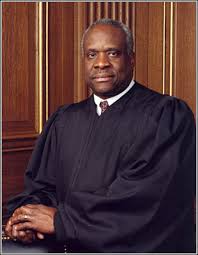 Originalism is more than just one type of interpretation or Jurisprudence in regards to the Constitution. There are three main types of Originalists, Original Intent, Original Meaning, and Constructionist [textualist]. All of do have common threads, with perhaps the most important one being, the Constitution is a document of limits on the Government and is designed to protect the “inalienable rights” [Natural Rights according to Locke and Montesquieu], and it is the Judges and Justices job to determine what Law is, not what Law should be. The methods of determining what Law is is done differently depending on the type of Originalist one may be.
What law should be to an Originalist is a function of the Legislature, it is the job of the Courts to determine how it is applied in Justice, what was the intent of Congress in the law, and whether it abides by the confines of the Constitution, WHAT LAW IS not if it is what some or that Judge or Justice would want the law to be. To an Originalist, Judges are to act only as “Umpires” to law, not judge if a law is moral or if the law is outdated, they believe morality of law is a function of the Legislature and if it is outdated, that is also the domain of the Legislature to repeal it, not the Judicial Branch to negate it, provided the law abides by the confines of the Constitution.
Wednesday, October 6, 2010
Arizona Immigration Law
On Monday the 0th US Circuit Court of Appeals allowed 11 Foreign Nations to file Friend of the Court letter in regards to Arizona Bill SB 1070 [Arizona Immigration Law].
This brings up several significant Constitutional Questions.
1. Do foreign States have standing to file on an international subject? This is a Challenge between the State of Arizona and the United States Governments, the bill and US Challenge does not effect a foreign state, only US laws.
2. This filing is conducted by the USDOJ, and Executive Branch, which does not have the Authority to Regulate trade or Naturalization, this is the domain of Congress. by introducing Foreign Nations in the respect to immigration, this is to assume a power of determining the Natural Status of an Individual without the consent of Congress.
3. By allowing Foreign Nations to file once again dealing with the domain of Foreign Nationals within the United States, a domain only of Congress, the Judiciary is now in a role to determine the status of a person without regards of the will of Congress, who has the sole authority to set rules of Naturalization.
http://www.politico.com/news/stories/1010/43199.html
http://www.myfoxphoenix.com/dpp/news/immigration/immigration-arizona-lawsuit-10-5-2010
Tuesday, October 5, 2010
What is Federalism?
 Most at one point or another probably have heard of “The Federalists Papers”, in some capacity, but what is a Federalist or Federalism? How many who have heard of or read the Federalist Papers, also knew the opposite had been written, “The Anti-Federalist Papers” making the argument against the proposed Federal system of government? When many hear “Federal” they think singularly of the “Federal Government” in Washington, D.C., consisting of Congress, the President, The Supreme Court and all of their subordinate organizations. Merriam-Webster Dictionary defines Federalism as, “the distribution of power in an organization (as a government) between a central authority and the constituent units”, or simply as it applies to the United States, it is the separation of powers from the National [Federal] Government and those of the individual states. It is a system that keeps the sovereign power among the many [States in regards to the United States] while having a separate sovereign power of the whole. But why did the Drafters of the constitution not just choose to form one National Government, why did they choose a Federal system of Government instead?
The idea of Federalism appeared early in the Convention. Edmund Randolph submitted his Virginia Plan on May 29, 1787 outlining a new “National” Government. When asked by Mr. Wilson [the following day]if he wished to abolish the states, Randolph responded no, he did not wish to abolish the states, adding his submission was simply a shell of ideas, which at the time only addressed a National Government. Also on May 29th, Charles Pinckney of South Carolina submitted his proposed Constitution to the Convention [Note 1], which detailed a Federalist system, a National Government while the individual states reserved their own separate sovereignty amongst themselves.
First we need to look at how the United States Government was constructed before hand and what short comings it had to require a change to the current Constitution. From 1781 until 1789 [When the Constitution went into effect] the United States operated under the Articles of Confederation, as the name states a confederation of the States. This form of government relied heavily on State sovereignty, with a very weak United States Government at the center. The states controlled most of the power in the loose Union, States could lay its own taxes, duties and excises, make its own laws, and do most all of the things any one sovereign nation of the world could do. The Government of the United States was vested in one body, The Congress of the United States Assembled, a legislative body with no executive or courts. A president of the Congress was voted on and appointed by the Congress itself, but this President did not have true executive abilities as we know them today. The Congress could pass laws, and request monies from the individual States, but it had no power to enforce these, or to try those who broke them, the enforcement of the Laws of Congress was left up to the states to do. The Congress had no power to compel states to abide by any of its resolutions, hence a state could just choose to ignore what the Congress passed without consequence. But also the Government of the United States had no power to quell Insurrection or Rebellion, and this proved to be the fatal and final blow to the Articles of Confederation in the aftermath of Shay’s Rebellion in 1786-87.
 Even before Shay’s Rebellion in Massachusetts the flaws of the Articles of Confederation were known, and a convention was called to consider what needed to be changed in the Articles, occurred in Annapolis in 1786, but attendance was so low it adjourned after only 4 days, resolving only to recommend another convention in the Spring of 1787 in Philadelphia [known as Constitution Convention of 1787 now]. It was known going into the Convention of 1787, that the Government of the United States needed to be strengthened if it was to survive, as well as the survival of the states themselves. The Convention was called to “Revise and Amend" the Articles of Confederation, but as we all know today it ended with our Constitution.
It was known certainly by most, if not all of the Delegates going into the Convention of 1787, the Government of the United States would need to be strengthened, but to what point was unknown. As mentioned both Randolph and Pinckney proposed plans before the Convention on May 29, 1787, with debate on the Virginia plan commencing on May 30, 1787 The debate began centered on the many points of Randolph’s Virginia Plan. It was noted early in the debates by Mr. Morris of the distinction between National and Federal, with the agreement being to have a National Government in a system where the States retain rights, this being a Federal System. It was important for most, though not all the Delegates, for the States to retain their sovereignty and power, but also have a Supreme Power [not Absolute, refer to John Locke post for this significance] of one from all. Very few delegates were willing to give up their states identity or ability to govern themselves in totality, and Federalism provided the ideal balance of the need of a strong National Government, while maintaining the States sovereignty.
SEPARATING THE POWERS
This concept of Federalism, eventual lead to the division of power between the two sets of powers, as well as checks on those powers. In the Constitution itself, the powers delegated to the Congress are found in Article I Section 8.
- The Congress shall have Power To lay and collect Taxes, Duties, Imposts and Excises, to pay the Debts and provide for the common Defence and general Welfare of the United States; but all Duties, Imposts and Excises shall be uniform throughout the United States;
- To borrow Money on the credit of the United States;
- To regulate Commerce with foreign Nations, and among the several States, and with the Indian Tribes;
- To establish an uniform Rule of Naturalization, and uniform Laws on the subject of Bankruptcies throughout the United States;
- To coin Money, regulate the Value thereof, and of foreign Coin, and fix the Standard of Weights and Measures;
- To provide for the Punishment of counterfeiting the Securities and current Coin of the United States;
- To establish Post Offices and post Roads;
- To promote the Progress of Science and useful Arts, by securing for limited Times to Authors and Inventors the exclusive Right to their respective Writings and Discoveries;
- To constitute Tribunals inferior to the supreme Court;
- To define and punish Piracies and Felonies committed on the high Seas, and Offences against the Law of Nations;
- To declare War, grant Letters of Marque and Reprisal, and make Rules concerning Captures on Land and Water;
- To raise and support Armies, but no Appropriation of Money to that Use shall be for a longer Term than two Years;
- To provide and maintain a Navy;
- To make Rules for the Government and Regulation of the land and naval Forces;
- To provide for calling forth the Militia to execute the Laws of the Union, suppress Insurrections and repel Invasions;
- To provide for organizing, arming, and disciplining, the Militia, and for governing such Part of them as may be employed in the Service of the United States, reserving to the States respectively, the Appointment of the Officers, and the Authority of training the Militia according to the discipline prescribed by Congress;
- To exercise exclusive Legislation in all Cases whatsoever, over such District (not exceeding ten Miles square) as may, by Cession of particular States, and the Acceptance of Congress, become the Seat of the Government of the United States, and to exercise like Authority over all Places purchased by the Consent of the Legislature of the State in which the Same shall be, for the Erection of Forts, Magazines, Arsenals, dock-Yards, and other needful Buildings;—And
- To make all Laws which shall be necessary and proper for carrying into Execution the foregoing Powers, and all other Powers vested by this Constitution in the Government of the United States, or in any Department or Officer thereof.
These are the powers that are granted to Congress, powers a National Government needs to be able to conduct business, ensure tranquility and some uniformity among the states, provide for the common defense, a means to fund itself, and the power to effect all the powers into law, but the constitution also restricted Congress in certain aspects by clauses in Article I Section 9 of the Constitution.
In addition to Congress, the Constitution also prohibits the states themselves from doing certain things described in Article I Section 10.
- No State shall enter into any Treaty, Alliance, or Confederation; grant Letters of Marque and Reprisal; coin Money; emit Bills of Credit; make any Thing but gold and silver Coin a Tender in Payment of Debts; pass any Bill of Attainder, ex post facto Law, or Law impairing the Obligation of Contracts, or grant any Title of Nobility.
- No State shall, without the Consent of the Congress, lay any Imposts or Duties on Imports or Exports, except what may be absolutely necessary for executing it's inspection Laws: and the net Produce of all Duties and Imposts, laid by any State on Imports or Exports, shall be for the Use of the Treasury of the United States; and all such Laws shall be subject to the Revision and Controul of the Congress.
- No State shall, without the Consent of Congress, lay any Duty of Tonnage, keep Troops, or Ships of War in time of Peace, enter into any Agreement or Compact with another State, or with a foreign Power, or engage in War, unless actually invaded, or in such imminent Danger as will not admit of delay.
These were powers specifically reserved for the Federal Government to control foreign affairs, or prohibited outright to both, in both Sections 9 & 10.
The Constitution establishes an Executive with the power to carry out the laws on Congress, and establish Foreign relations, a Supreme Court who is the final say of what law is, and the Constitution establishes itself as the Supreme Law of the Land, and also allows for the Federal Government to respond to insurrection or rebellion in Article II Section 8, and upon the request of a state in Article IV Section 4 as it could not in Shay’s Rebellion, and guarantees a Republican Form of Government in all States.
But the Constitution also provides checks on these powers. Not only does the Legislature, Executive and Judiciary have checks on one another, the Federal relationship between the National and States Governments also had checks of power as well, to ensure neither the National nor State government grew more powerful than the other, though as we will see some have been removed.
It was this system that allows each State and the National Government to make its own laws independent of each other provided they do not intrude on the specific domain of another as described in the Constitution. This explains why laws vary from state to state and to the Federal Government itself, each having its own area of sovereignty, separate from the others. While the Constitution itself sets basic guidelines of the limits of laws, and what the boundaries are, and also provides for a Supreme Power (The Constitution and/or the Supreme Court) when conflicts among them arise.
STATE CHECKS OF THE FEDERAL POWER
STATE CHECKS OF THE FEDERAL POWER
 THE SENATE:Where the House of Representatives is the People’s House [it is still referred to today as the People's House] that is all elected by the popular vote of the people of a state or district, the Senate was originally appointed by the Legislature of the States they Represent [Note 2]. This done to ensure the concerns of the State and State interest itself were part of the law making process in the Federal Government. By providing this, this was to ensure that the Federal Government could not burden the States as a whole or require an act of a State without those states themselves having an ability vote or influence directly the outcome of such a proposal, whether it be a law or act, a Treaty, or Judge or Justice appointment that may effect a few or many States.
 THE ELECTION OF PRESIDENT: The electoral process we have is a result of the federalist system. By having votes for the President cast by Electors chosen by the people, a method was put in place to ensure the States themselves also had a direct role in the election of the President. The Legislatures of the States choose the manner in which the Electors are chosen, to be voted on by the people of the state [though not required to be voted on by the people, only the first election of President Washington in 1789 did not involve the people choosing the Electors]. This power gave the Legislature to ensure those who directly voted for the President as chosen by the people, met some requirements of their interest as well, provided they met the requirements states in Article II Section 2 of the Constitution.
 AMENDMENTS: The National government itself cannot change the Constitution, it also requires the Consent of the States. Two-Thirds majorities in both House of Congress are required, in addition three-fourth of the States must also assent to this change. The States can give assent in two different manners, either by its legislature affirming [both house required to affirm if bicameral], or by a special Convention for the purpose of considering the Amendment itself [Note 3]. This is too prevent either the States of the National Government from being able to change the Constitution without the others consent that may change the power one has compared to or over the other.
 TREATIES, JUSTICES and IMPEACHMENT: As mentioned the Senate was to be comprised of members chosen by the Legislatures of the states. The Senate, also had the responsibility of Ratifying treaties [two-thirds vote required], to confirm Federal Judges and Justices, and try the impeachment of Federal Officers [Impeachment occurs in the House of Representatives].. This ensured the States also had a considerable representative voice in the affirmation of these items, since each of these would have an effect on the states themselves in some manner.
FEDERAL CHECKS ON STATE POWER
SUPREME LAW: The Constitution is the Supreme Law, no state law may be in contrary to the Constitution or Federal Law,where joint jurisdiction exists. States may not make laws that negative a valid Federal Law, or is contrary to the Constitution itself.
AMENDMENTS: As noted with the States on the Federal Government the states cannot without the assent of Congress change the Constitution, to prevent the arbitrary transfer of power without the others consent.
DOMESTIC VIOLENCE: In the form of Insurrection of Rebellion, Article II Section 8, to be able to protect itself, and if a State request[Article IV Section 4] assistance from armed insurrection or domestic violence.
It may appear that the States have more checks than the Federal Government, which is somewhat true. But the Federal Government has the power of Supremacy, when the two laws conflict and jurisdiction exits legally for both on the same ground, Federal Law is Supreme to that of the States, which is in itself a very powerful check. The Checks the States possess are to ensure the Federal does not encroach on its legitimate power, while the Supremacy clause does the same for the Federal Government.
Moving to a Federal system from the Confederated system the United States operated under with the Article of Confederation was perhaps a Natural choice for the Delegates. The loose Confederation proved to be too weak to be effective in any manner what so ever, while the option to construct Centrist simply was not an option as very few were willing to part ways with the concept of sovereign states, and it would never have been ratified given how very difficult it was to ratify even this concept of Federalism.
Three three Branches of Government is how we divide power among one part of government, each with its own Checks and Balances as described by Montesquieu in his Spirit of Laws. Federalism is how we divide the power between different levels, the National and States Governments, under the concept the Government closest to you knows better how to govern for you.
Note 1: No record from the Convention of 1787 itself outlines Pinckney’s proposed Constitution, though Journals do reflect the fact he submitted one for consideration. The Draft used as his proposal was submitted by Pinckney himself in 1818 years after the Convention, when an attempt was being made to collect and preserve all information from the Convention itself by future President John Quincy Adams. The fact that limited records from the Convention details his proposals does call into question the accuracy of the Draft he submitted as to being the one actually proposed on May 29, 1787, though notes from James Wilson discovered in the early 1900’s tend to show much a what he submitted to be accurate.
Note 2: The 17th Amendment, ratified in 1913 changed to selection of Senators from appointments by the Legislatures of the State to a popular vote by the people of the state.
Note 3: No amendment has been ratified using a Convention of the States, the manner of of this may occur is only speculation, since the only precedent of a Convention is that of the 1787 Convention itself. It is unknown if States would call for their own Conventions on an individual basis, either by an act of Law, or Popular vote to convene a Convention, or if all of the States would convene a collective Convention for debate and ratification of the proposed amendment.
Friday, October 1, 2010
Constitution and Declaration of Independence linked
The Constitution and Declaration of Independence Pages now have links embedded in them that link to post that discuss or mention the associated clause, section or article.
Subscribe to:
Comments
(
Atom
)